


In the Middle East and North Africa (MENA), where millions of people depend on humanitarian assistance, coordination rarely makes headlines. Yet it is the invisible backbone that keeps responses principled and effective. It is what ensures that aid reaches people in need at scale, that access is negotiated, and that humanitarian principles are upheld under pressure.
Paradoxically, just as needs soar and agencies need to work collectively to maximise efficiencies, coordination is often the first casualty of shrinking budgets. This year, international coordination leadership at country level has been fully or partially deactivated in several responses. The result? National NGOs are left carrying heavier responsibilities, often without the resources, recognition, or protection they need.
ICVA is committed to keeping coordination alive by working through alternative models that are more cost efficient and responsive than the traditional UN led system, namely NGO-led coordination.
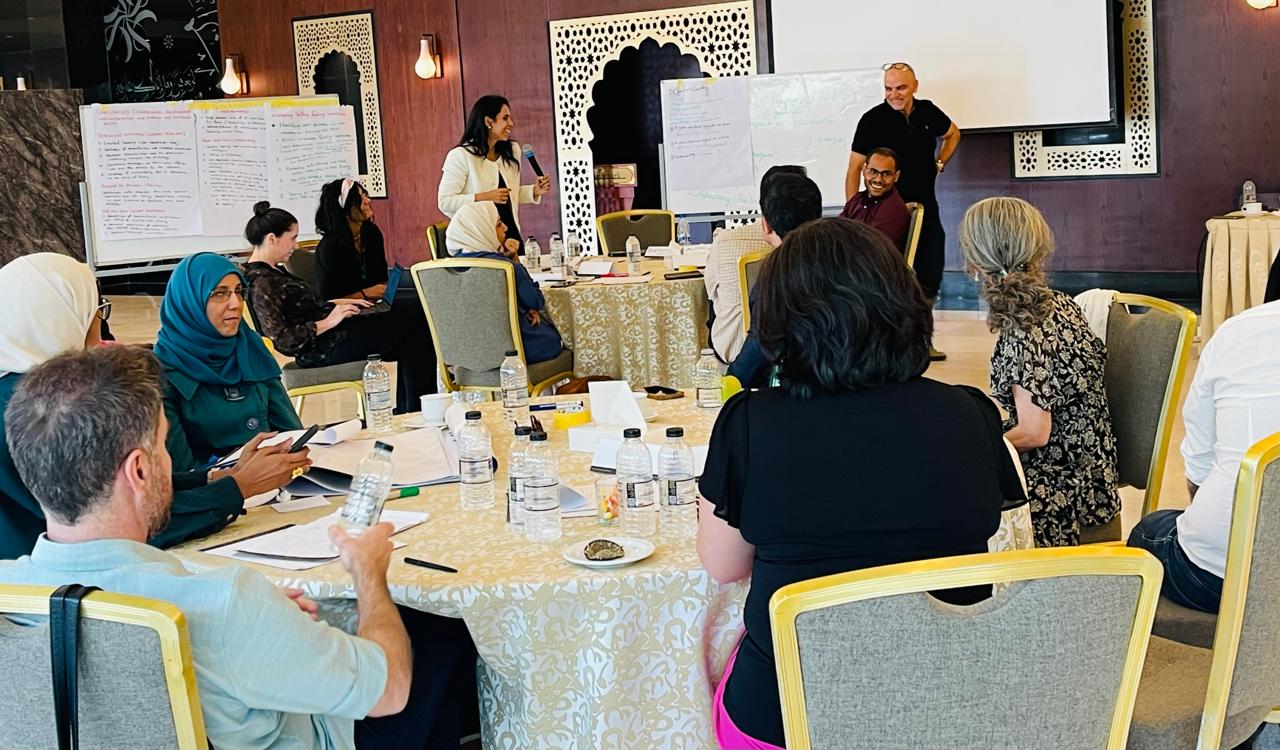
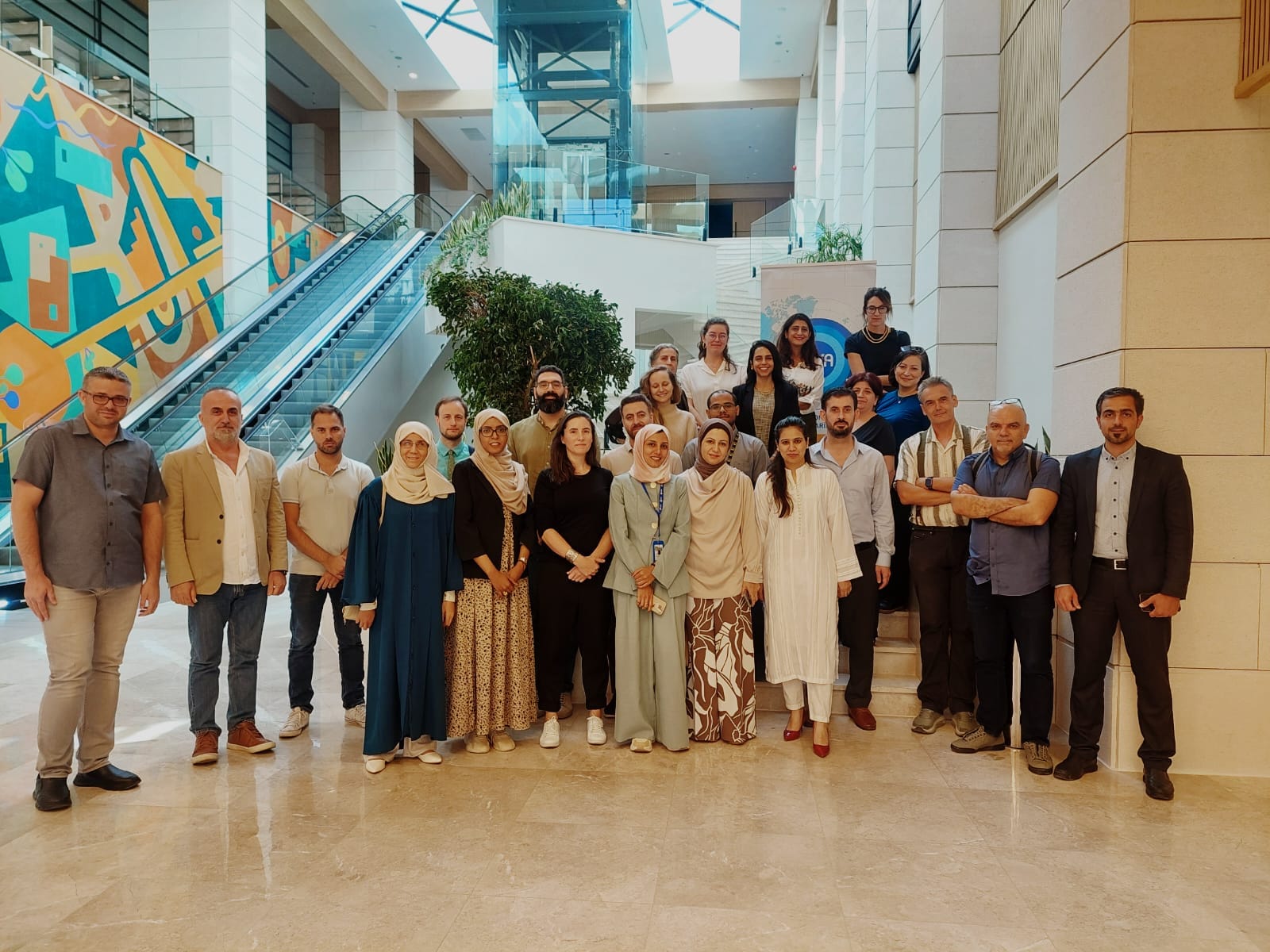
Last week in Amman, ICVA convened NGO fora leaders and steering committee members from across MENA, joined by peers from Asia-Pacific networks—ACBAR in Afghanistan and NAHAB in Bangladesh—for a workshop on “Building Bridges in Crisis: Regional Peer Exchange for Emerging NGO Networks.”
A region under strain
The humanitarian landscape in MENA is among the most complex in the world, with humanitarian response remaining essential and yet critically underfunded.
From Gaza to Yemen and Syria, communities endure displacement, fragmented governance, and the collapse of essential services and protections. Iraq, Lebanon, and Libya wrestle with fragile institutions and political instability that leave millions without reliable support. In Egypt and Palestine, restrictive regulations and shrinking civic space prevent NGOs from accessing populations with critical needs. Meanwhile, Jordan continues to host one of the world’s largest refugee populations with dwindling resources.
What emerged however was a shared reality: while contexts differ in detail, crises are multiplying while the structures and systems that make humanitarian response possible being defunded, blocked and attacked.
“The workshop created a rich space for peer exchange, where NGO leaders shared strategies to sustain their networks amid shrinking funds and complex coordination challenges in the region.”
NGO Fora participant
Solutions for Sustaining Effective Coordination in Times of Contraction
The workshop focused not just on shared challenges but on solutions. Participants explored practical ways to uphold principled and effective response, sustain coordination mechanisms, and adapt to political and financial pressures. Several themes emerged:
1. Localisation with resources, not rhetoric
The humanitarian reset has emphasised the acceleration of the locally led agenda, with coordination responsibilities increasingly expected to shift to national NGOs and local authorities. Participants warned, however, of a troubling gap between expectations and reality.
Where the UN once staffed full-time coordination specialists, many of those posts are now gone. Responsibilities are being pushed to national and local NGOs without the corresponding investment in staff, training, or predictable funding.
Localisation without resourcing risks setting local actors up to fail — with severe consequences for meeting growing humanitarian needs. Effective coordination is a full-time job requiring dedicated staff, predictable funding, and technical expertise. Without this, national NGOs are left carrying heavier responsibilities with little backing, undermining the very principle of strengthening local leadership.
Localisation without resources risks failure, leaving local actors overburdened and under-supported. Effective coordination is not a voluntary extra; it requires dedicated expertise and funding. INGOs, too, continue to provide critical convening power and advocacy that complement national NGO leadership. Both roles must be recognised and resourced.
2. Principled engagement with authorities
In MENA, humanitarian access often hinges on sustained engagement with a range of authorities, including state, local, and non-state. Drawing on lessons from Iraq and Yemen, participants explored practical approaches to navigating politically sensitive environments, drawing on lessons from local networks and regional experiences.
They stressed that engagement with authorities is not optional but essential to ensure aid reaches those most in need.
They highlighted that this often involves navigating fragmented governance structures and overlapping mandates of multiple authorities, as well as dealing with limited or inconsistent relationships with government counterparts. In some cases, fora themselves face weak governance, such as the absence of clear terms of reference, defined roles, or a strategic direction, which further complicates advocacy and access negotiation efforts.
The challenge is not only to strike a balance between the humanitarian principles while engaging in dialogue that enables humanitarian action, but also to ensure consistency of messaging across actors to avoid undermining collective positions.
One particularly effective strategy is leveraging partners with specific expertise to negotiate with authorities, for example, a health partner engaging the Ministry of Public Health to focus on technical issues. This pragmatic approach is more effective than an ideological one.
However, negotiations must be undertaken with principled safeguards, risk mitigation strategies, and transparent communication with affected communities. Importantly, the backing of collective platforms is essential to protect individual organisations from undue pressure or reputational risk, and from reducing the risk of divide and conquer strategies undermining collective humanitarian access.
3. Enabling effective NGO Forum governance
Examples from Asia-Pacific highlighted how strong governance structures can sustain networks through turbulence. ACBAR in Afghanistan and NAHAB in Bangladesh showed how clear rules, diversified funding models, and regular leadership rotation can build credibility, continuity, and principled advocacy even in the toughest contexts.
MENA participants drew on these models to identify ways to strengthen their own fora, from improving governance and leadership transitions to reducing donor dependency while ensuring local ownership and accountability. The message was clear: strong governance is not just an internal matter, it is the foundation for trust, influence, and survival.
“Local fora are likely to face significant challenges in the coming period amid a fragile and uncertain context. They will need support to sustain their operations, making continued engagement and follow-up on the workshop’s recommendations essential.”
NGO Fora participant
4. Championing protection and humanitarian principles
Palestinian networks, including AIDA and PNGO, demonstrated how different structures, both formal and flexible, can work in tandem to deliver timely and principled advocacy. Their experiences underscored the importance of fora as collective voices, capable of speaking truth to power even in highly constrained environments. For participants, this reinforced that effective advocacy cannot be the task of single organisations alone. It requires common platforms, trusted by members, that can mobilise quickly and credibly in moments of crisis.
A call to sustain the backbone of response
Participants left the workshop with both practical insights and a clear warning. They reported a deeper understanding of local leadership, governance practices, and cross-regional learning. They praised the participatory approach, the openness of discussions, timeliness, and the opportunity to connect with peers from other countries. Looking ahead, they called for continued ICVA support—on forum governance, practical sustainability solutions, and navigating complex political environments.
They also agreed on one central point: without predictable and diversified funding, NGO fora cannot survive shrinking budgets and growing demands.
In an era of fragmentation and polarisation, ICVA will continue to build spaces for connection and solidarity, standing with NGO fora, amplifying local leadership, reinforcing regional collaboration, and advocating for coordination to be recognised as essential humanitarian infrastructure.
Because if coordination collapses, response collapses. Sustaining it is the bridge that keeps humanitarian action principled and effective.