ICVA has a long-standing commitment to promoting transparency and accountability in the selection of the UN High Commissioner for Refugees (UNHCR).
We have compiled a set of questions—developed in consultation with ICVA members—for all candidates interested in serving as the next High Commissioner.
Our aim is not to endorse any particular candidate, but to ensure that the humanitarian community, the public and most importantly forcibly displaced and stateless persons can better understand the vision and priorities of those seeking to lead UNHCR.
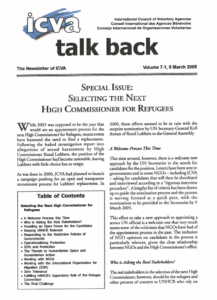
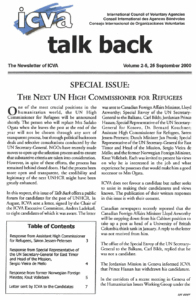
ICVA has previously posed similar questions to UNHCR candidates in 2000, 2005, and 2015 and published the interviews. This continuity demonstrates our ongoing commitment to open dialogue around principled humanitarian leadership.
Submission Guidelines
Please respond to each of the five questions below by Thursday October 24th.
Optional: submit a short video introduction (max 2 minutes) by sharing a youtube link. ICVA cannot edit videos.
ICVA will publish the received responses on Friday 25 October. Responses received after this time will be published on a rolling basis.
Notes:
ICVA will publish submissions verbatim. We do not endorse any candidate.
ICVA are not involved in the recruitment. Please apply for the role via the UN website.
Questions for UNHCR High Commissioner candidates
1. In a time of growing financial insecurity, mounting challenges to multilateralism, and threats to humanitarian space, what is your vision for UNHCR and why are you the right person to lead the organisation?
2. UNHCR is undergoing a major restructuring, the full impact of which is yet to be seen. If you were to be appointed High Commissioner, where would you focus attention in the short, and medium term? What steps would you take to ensure the organisation stays principled and relevant, while fostering trust and transparency.
3. How would you lead the organisation to bring about a cultural shift that rebalances power in shaping responses to meaningfully include forcibly displaced and stateless persons, and how do you see partnerships with operational actors?
4. In a context of rising forced displacement and shrinking asylum space, refugee protection instruments and frameworks are under strain, and increasingly in tension with political interests. As High Commissioner, how would you ensure the agency upholds and reinvigorates the refugee protection regime?
5. With crises becoming more protracted, how would you position the agency to strengthen its core mandate while working more effectively across the humanitarian-development-peace nexus?
ICVA is a global network of non-governmental organisations whose mission is to make humanitarian action more principled and effective by working collectively and independently to influence policy and practice.
Contact
International Council of Voluntary Agencies
NGO Humanitarian Hub,
La Voie-Creuse 16, 1202, Geneva, Switzerland
Email: secretariat@icvanetwork.org
Subscribe to ICVA Bulletin
A curation of monthly updates, latest news, tools, and events around forced migration, coordination, financing, and cross cutting issues all sent straight to your inbox.